
GANANA: A New Europe-India HPC Collaboration Has Been Launched!

Cathrine Bergh, PDC
India has made significant strides in high-performance computing (HPC) over the last decade, including the deployment of seven large-scale HPC systems (with performance above 1 PFLOPS) and ambitious future plans for developing a completely indigenous processor. The newly launched GANANA project aims to unite Europe’s mature HPC competency with India’s rapidly growing capabilities in order to tackle shared scientific problems of high societal impact.
GANANA was officially launched on the 1st of February this year and is centred on three different scientific domains: the life sciences, geographical hazards, and weather and climate modelling. These fields all share a great need for efficient computation to generate predictions of high societal impact, especially in the face of various disasters, such as diseases, earthquakes or harsh weather conditions. However, fast and accurate calculations require optimised and bug-free computer software. GANANA therefore aims to create new avenues for collaboration between researchers already working on HPC codes within these three scientific fields, for example, by gathering domain expertise from different institutions and transferring knowledge between domains that share many computational approaches but which, by tradition, do not interact much. To facilitate collaboration, GANANA also includes a program to exchange both personnel and HPC resources between Europe and India. This way, we can learn more about each other’s expertise, approaches, and future needs.
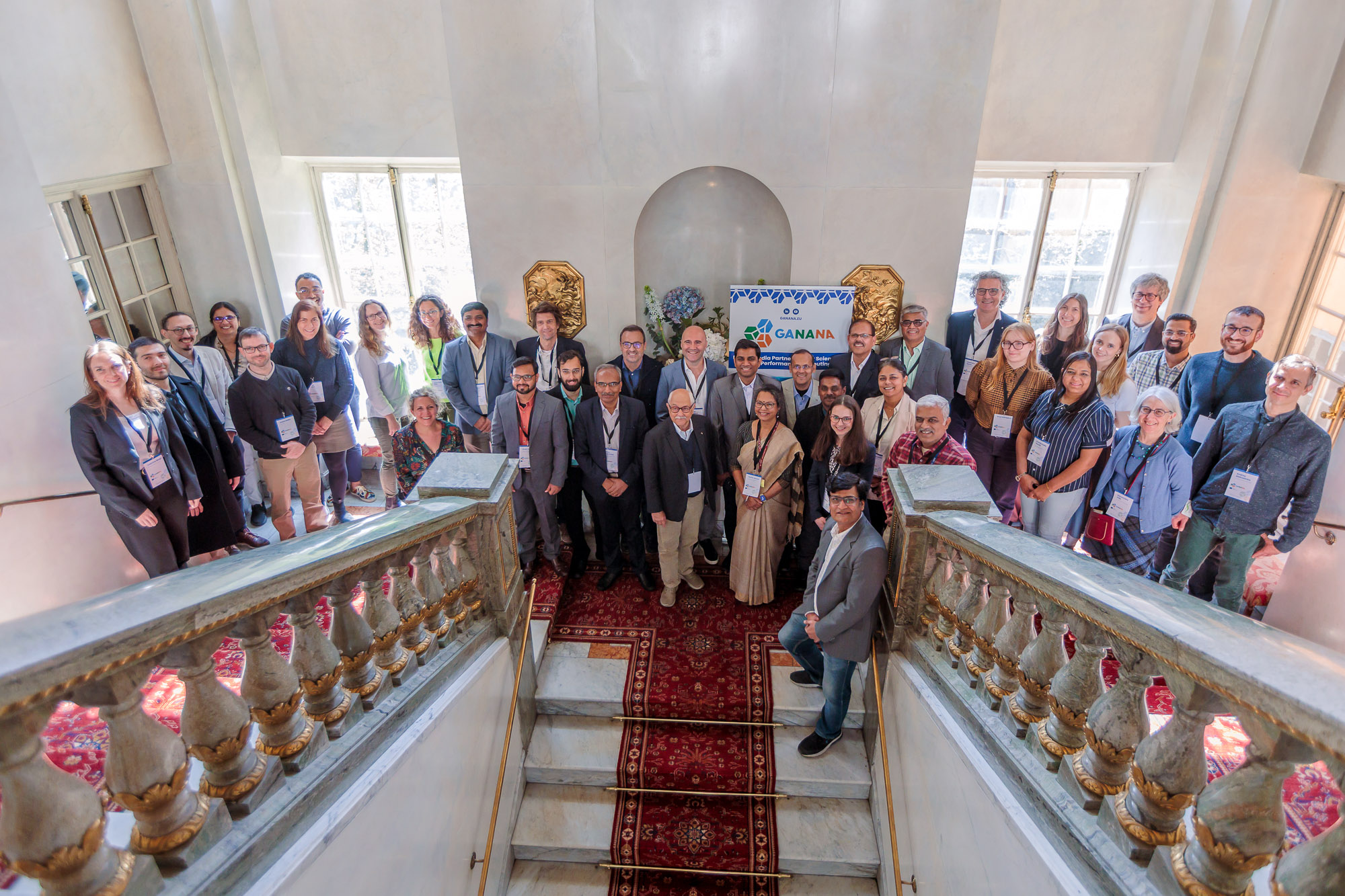
KTH and PDC, as the project coordinator, spent much of the spring this year setting up channels for collaboration and getting the GANANA project going. This work finally culminated in the GANANA Launch Symposium held in May 2025, where we had the pleasure of inviting representatives from all 10 European partners, three Indian partners, and other stakeholders to Stockholm to discuss the future of the project. We were pleased to witness many constructive discussions and concrete plans being made. We now look forward to rolling up our sleeves for the next phase of the project and beginning the journey towards creating a long-lasting collaboration between Europe and India for future impactful scientific high-performance computing. KTH and PDC are coordinating the project and will primarily contribute to accelerating and enhancing the GROMACS molecular dynamics software (through implementing fixed precision coordinates, modernising communication algorithms, and improving software/ hardware co-design) and to the development of a framework for AI-driven immunogenic peptide prediction.
For more information about the GANANA project, see the project's website at ganana.eu .